
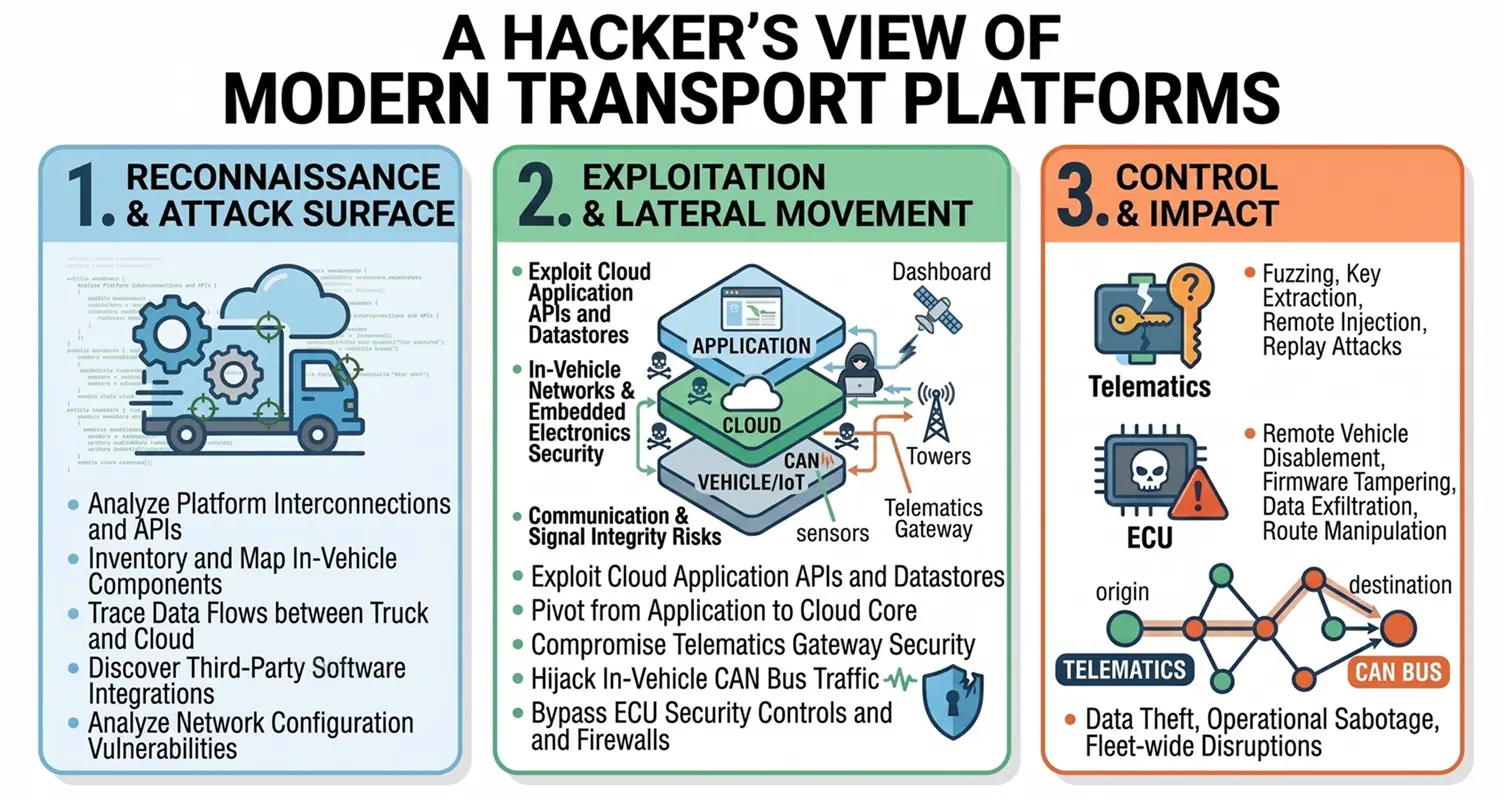
Modern transport platforms look simple from the outside. You book a shipment, track it, and wait for delivery. From a hacker’s perspective, though, these platforms are not just apps or services. They are layered electronic ecosystems made up of interconnected devices, networks, and embedded systems.
Understanding how these systems work from the inside reveals both their strengths and their vulnerabilities. This article explores modern logistics platforms through that lens, focusing on the electronics that power them and the risks that come with that complexity.
Transport Platforms Are Electronic Systems First
At their core, modern logistics platforms are not just software platforms. They are cyber-physical systems.
They combine:
- Embedded electronics inside vehicles
- Wireless communication modules
- Cloud-connected platforms
- IoT sensors and telematics hardware
This level of integration means that every moving vehicle is also a node in a wider digital network. The more connected these systems become, the larger the potential attack surface.
The Telematics Layer: A Prime Entry Point
Telematics systems sit at the heart of modern transport platforms. These devices track location, monitor performance, and communicate with central systems.
From a technical perspective, telematics hardware:
- Transmits real-time data over cellular or satellite networks
- Interfaces with internal vehicle electronics
- Connects to external platforms and dashboards
If these systems are not properly secured, they can be exploited through data interception or signal manipulation. This makes them one of the most critical electronic layers to protect.
In-Vehicle Networks and Embedded Electronics
Inside every modern transport vehicle is a network of electronic control units. These systems communicate through internal protocols that manage everything from engine performance to braking.
The challenge is that many of these systems were originally designed for reliability, not security.
This creates potential issues such as:
- Limited authentication between components
- Multiple access points through connected systems
- Exposure through diagnostic or communication interfaces
Because these systems control physical functions, any compromise has real-world implications, making them a key focus from a security standpoint.
Communication Networks and Signal Integrity
Transport platforms rely on constant communication between vehicles, devices, and central systems.
This includes:
- GPS signals for positioning
- Cellular networks for data transmission
- Local wireless connections in depots or hubs
These communication channels are essential, but they also introduce risks if not properly protected. Interference, signal spoofing, or weak encryption can disrupt operations or reduce reliability.
Maintaining secure and stable communication is therefore fundamental to the integrity of the entire system.
The Platform Layer: Where Coordination Happens
Above the hardware sits the digital platform that manages bookings, routing, and coordination.
This layer brings together multiple data streams and turns them into actionable decisions. It is responsible for:
- Assigning transport jobs
- Managing schedules and routes
- Handling user interactions and updates
Because it connects users, carriers, and systems, it becomes a central point of dependency. Any weakness here can affect multiple parts of the operation at once.
Where Platforms Like This Fit In
Modern logistics services rely on all of these electronic layers working together seamlessly.
For example, platforms that allow users to transport your car in Indianapolis depend on:
- Reliable communication between devices
- Secure handling of booking and identity data
- Integrated tracking systems
These platforms show how logistics has evolved into a connected electronic environment where each layer supports the next.
The Bigger Takeaway
Looking at transport platforms through a technical lens changes how you understand them.
They are not just logistics tools. They are systems built on:
- Embedded electronics
- Continuous data exchange
- Interconnected communication networks
Each layer introduces both capability and complexity. The more advanced these systems become, the more important it is to ensure that every component, from hardware to software, is designed with reliability and security in mind.
Because in modern transport, the real movement is not just happening on the road. It is happening across the electronic systems that make the journey possible.
What Do You Need to Know Before Installing a Home EV Charger?
https://www.hackatronic.com/best-driveway-lights-to-enhance-your-homes-safety-and-style/
https://www.hackatronic.com/how-billboard-manufacturers-are-innovating-outdoor-advertising/
https://www.hackatronic.com/beyond-the-pixel-the-definitive-guide-to-the-dell-monitor-ecosystem/