We have all encountered this situation. In the middle of a busy workday or while submitting an important project, you hit an unexpected obstacle: your file is in the incorrect format. Whether it is a PDF that needs to be an editable Word document or a large PNG image that must be compressed into a JPEG, format mismatches are a frequent issue.
The standard response for most users is to open a search engine, type in “free xyz file converter,” click the first available link, upload the document, and download the processed file. The entire process takes less than thirty seconds and offers immediate convenience.
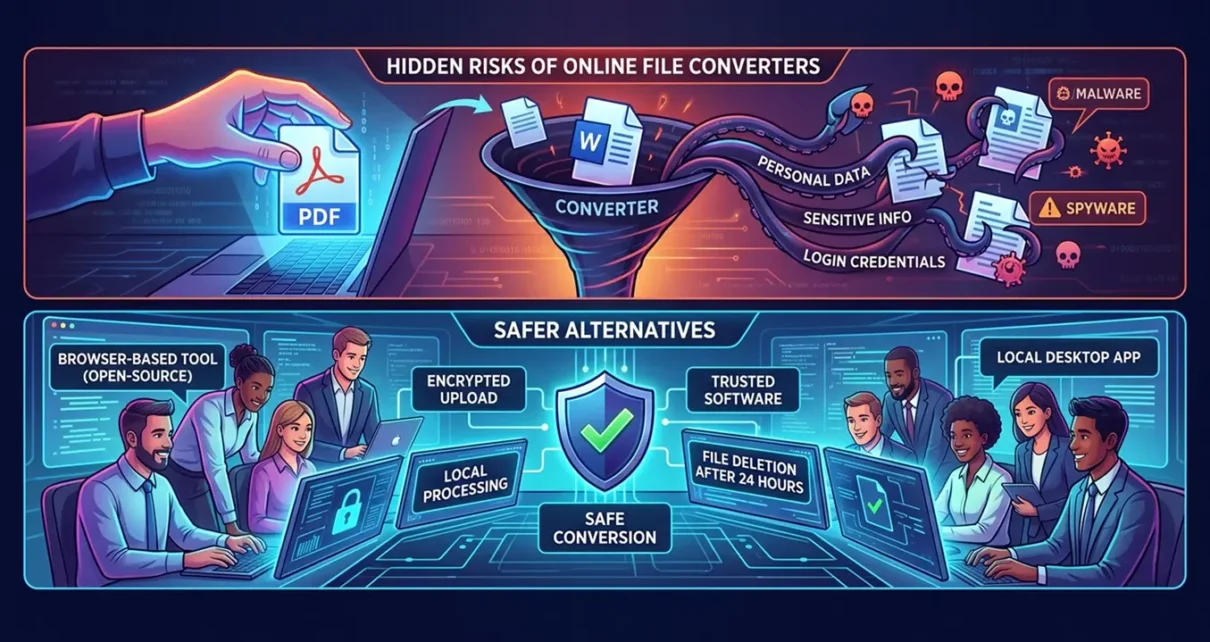
However, few users stop to consider what happens to their data after they click download. Standard web utilities frequently store documents on public servers. While converting a non-sensitive image or public file might carry low risk, handling business contracts, medical records, tax forms, or private photographs on these platforms can unintentionally expose sensitive personal and corporate data.
Fortunately, balancing operational speed with data safety is no longer mutually exclusive. Understanding why digital privacy matters during routine file conversions can help users identify dependable solutions that protect their workflow.
Related Articles:
- Modern Fast Charging Technology, USB PD and GaN Chargers Explained
- Just Got a New iPad? What Are the First 10 Apps You Should Install?
- Electronics Insurance: When It’s Worth Covering Your Gadgets
- Beyond Pixels: A Definitive Guide to the Dell Monitor Ecosystem
- How to Build a Reliable Custom Drone Controller on a Budget
- Why Tech Gift is the Ultimate Choice for Your Partner
The Hidden Risks of Online File Converters
The modern internet operates largely on convenience. Free utilities that require no registration or monthly subscription fees are highly popular. However, maintaining a web platform incurs significant operational costs, particularly when processing large files and running backend conversions. When a service is entirely free and does not display advertisements, it often generates revenue through alternative methods, such as tracking user behavior or maintaining data logs.
Several common risks are associated with standard, everyday conversion tools:
Extended Server Retention: Many platforms retain user documents on their servers for days, weeks, or indefinitely. In the event of a security breach or data leak, these files can be exposed to unauthorized parties.
Lack of Data Encryption: If a platform does not employ current security protocols, data can be intercepted during the upload or download transfer process.
Obscured Terms of Service: Certain free utilities include clauses within their terms of service stating that by using the platform, the user grants permission for their data to be viewed or analyzed.
When evaluated from a security standpoint, a straightforward format conversion can transition from a quick task into a significant data security risk.
Meet PrivConvert: A Fresh Approach to Digital Safety
To maintain data security without installing resource-heavy software locally, users require an alternative engineered specifically around data protection. This is where PrivConvert privacy-focused and secure file converter provides a practical solution.
Rather than treating privacy as an afterthought, this platform integrates security directly into its core design. It is built for professional and casual users alike who require a fast, clean workflow but still demand absolute control over their digital footprint.
A secure utility provides the same speed and format flexibility as standard platforms but ensures that files remain strictly under the user’s control. The system is designed to minimize file retention and remove temporary data after processing, reducing the digital footprint left behind.
How Modern Privacy Protection Works
Understanding how a secure platform safeguards digital assets does not require an advanced technical background. It relies on a few straightforward, transparent practices that modern web utilities should consistently implement:
Automated File Deletion: A dependable platform should not retain documents any longer than necessary for processing. Once the conversion is complete and the file has been successfully downloaded to a phone or computer, the original upload should be permanently removed. When a platform enforces a strict policy to delete files from its servers immediately after processing, the potential window for data exposure is effectively minimized.
End-to-End Encryption During Transfers: Data must be protected throughout its entire journey across the internet. Reliable services utilize secure connection protocols, such as HTTPS, to ensure that documents remain fully encrypted as they travel from the user’s browser to the conversion engine. This process ensures that information cannot be easily intercepted or read by third parties while in transit.
Elimination of Intrusive Tracking: Many web users face fatigue from platforms that track their browsing habits, target them across social media, and build consumer profiles. A secure tool respects user privacy by avoiding invasive tracking cookies and omitting aggressive registration prompts that force users to give up personal details.
The Benefits of a Flexible Conversion Tool
While safety is a primary requirement, a utility must still deliver practical functionality. If a website is secure but suffers from slow processing speeds or a frustrating user interface, users frequently revert to faster, less secure alternatives.
An effective solution balances robust security with high usability. A modern web utility should seamlessly manage standard file categories with minimal friction:
Documents: Converting large PDFs into editable Word documents or turning plain text files into clean formats suitable for professional presentations.
Images: Interchanging between common formats like PNG, WEBP, and JPEG based on whether the priority is high visual clarity or optimized file sizes for web performance.
Audio & Video: Adapting media formats for compatibility with specific media players or compressing video dimensions to facilitate easier distribution via email.
Consolidating these capabilities into a single, uncluttered dashboard eliminates the need to navigate multiple single-purpose websites, keeping the digital workflow centralized and stable.
Final Thoughts: Prioritizing Privacy in File Management
In the physical world, security measures for keys, financial cards, and residential addresses are strictly maintained. Digital files deserve the exact same standard of care. Every document uploaded online contains specific insights regarding professional operations, proprietary projects, or personal life details.
Transitioning to a secure file conversion alternative does not require disruptive changes to daily routines, costly subscriptions, or complex software installations. Instead, it relies on making a conscious, informed choice when choosing web-based tools.
Ultimately, prioritizing data privacy during online conversions is an essential practice in safeguarding your broader digital footprint. Utilizing a platform intentionally engineered to keep information secure and private ensures that productivity never comes at the cost of data security.
Modern Fast Charging Technology, USB PD and GaN Chargers Explained
Beyond the Pixel: The Definitive Guide to the Dell Monitor Ecosystem
Just Got a New iPad? What Are the First 10 Apps You Should Install?
Electronics Insurance: When It’s Worth Covering Your Gadgets

